The Weather Window: When House Painting Should Not Happen
Published
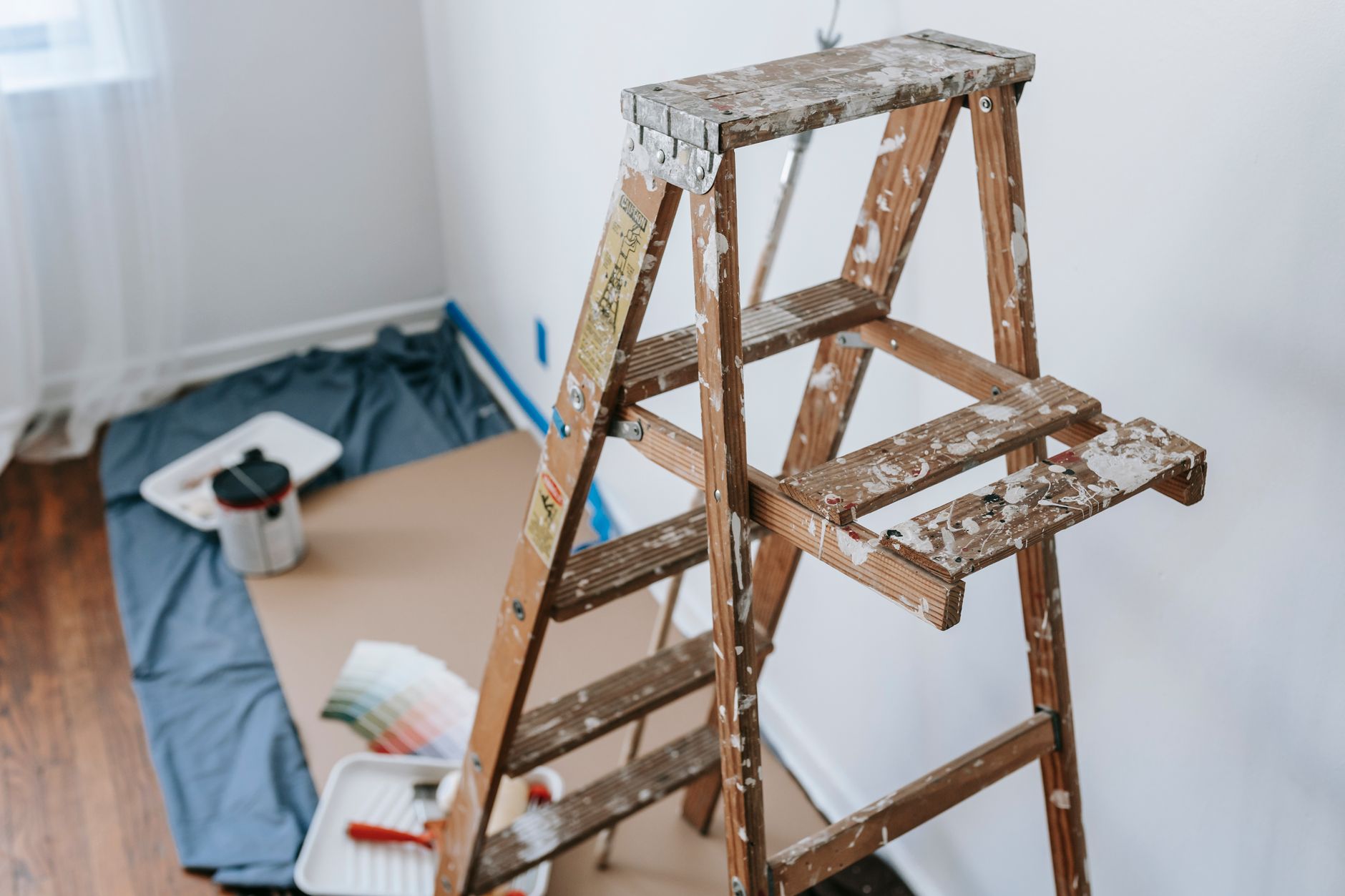
Coating a wall is a chemical process with conditions attached, and the conditions are printed on the side of the can in small type that almost nobody reads. Paint applied outside that band does not fail immediately or dramatically. It fails quietly, two or three years early, in ways that look like a product problem or a preparation problem, and the actual cause was a Tuesday morning that was six degrees too cold.
This is the part of the job a homeowner has the most influence over and the least information about. A crew under schedule pressure will paint in conditions they know are marginal, because the alternative is losing the day. Knowing what the limits actually are, and why they exist, changes that conversation.
What has to happen for a coating to work
A waterborne coating dries in two stages that people conflate constantly.
The first is evaporation. Water leaves the film and the surface stops being wet. This is what dry to the touch means, and it can happen in under an hour.
The second is coalescence. The resin particles left behind have to flow together and fuse into a continuous, flexible film. This is the stage that actually creates the coating, it takes far longer, and it is temperature dependent in a way that evaporation is not.
Every product has a minimum film formation temperature, below which coalescence does not complete. Paint applied below it dries, looks fine, and never becomes a proper film. It stays porous and weak, it chalks early, it fails adhesion, and it often takes a year for anybody to notice.
That is the reason temperature minimums exist, and it is why they cannot be negotiated by adding a second coat or waiting longer.
The three temperatures, and only one of them is on your phone
Air temperature is what the forecast tells you. It is the least useful of the three.
Surface temperature is what the coating actually touches, and it is wildly different from air temperature. A south facing dark wall in direct sun can sit far above ambient, easily above the point where a coating flashes off before it can level, leaving lap marks and poor adhesion. The same wall in shade at seven in the morning can be well below ambient because it radiated heat to the sky all night. An infrared thermometer costs very little and any crew doing serious exterior painting should have one in the truck.
The third temperature is the overnight low, and it is the one that catches people out. Most products specify a minimum that must hold not just during application but for some hours afterward, often overnight. A day that reaches a comfortable afternoon high and drops sharply after sunset can put a freshly coated wall below the minimum during the exact window when coalescence is still happening.
The practical implication is that a fine looking afternoon in a cool month is often not a paintable afternoon, because the coating will be caught by the evening.
Dew point is the number nobody checks
Dew point is the temperature at which air becomes saturated and moisture condenses onto surfaces. When a surface falls to or below the dew point, it grows a film of water, whether or not anybody sees it.
Coating a surface with condensation on it is coating a surface with a release agent. Coating a surface that will reach dew point a few hours later, while the film is still open, is worse, because the moisture forms inside a partially cured coating. The visible result is called surfactant leaching, meaning brown or tan streaks running down a freshly painted wall, and it is one of the most common callbacks in the trade. It usually appears on the shaded elevations the morning after.
The rule of thumb professionals use is to keep the surface at least a few degrees above the dew point during application and during the cure window. On a coastal or marine influenced morning the surface can sit at dew point until mid morning, which is a large part of why crews who know what they are doing do not start coating at first light even when the light is good and the day looks perfect.
Humidity slows everything, and that is not always bad
High relative humidity slows evaporation. The film stays open longer, the recoat window extends, and cure takes longer.
That has one genuine advantage, which is that it reduces lap marks by giving the coating time to level. In hot dry conditions the opposite problem dominates: material skins over so fast that a roller coming back to a previously coated area cannot blend into it, and the join shows permanently.
The disadvantages are larger. Extended open time means extended vulnerability to dust, insects and a sudden rain. It means the second coat is delayed, sometimes past the end of the working day. And combined with falling evening temperatures, high humidity is exactly the recipe for the condensation problem above.
Most manufacturers put an upper humidity limit in the data sheet, commonly around eighty five percent, and most crews ignore it.
Wind, sun and rain
Wind above a moderate speed causes two problems. It accelerates surface drying, worsening lap marks and reducing adhesion. And with spray application it carries material, which is how a neighbour's car acquires a fine coat of your body colour. Most crews will not spray above a modest wind speed and should not. Along the Santa Monica coast the onshore breeze off the bay builds most afternoons, so spray work on the west facing elevations usually belongs in the calmer late morning, once the surface has climbed clear of the dew point.
Direct sun on the surface being coated is a straightforward no. Work should follow the shade around the house, which is why a competent crew moves elevation to elevation through the day rather than working in the order that seems logical from the driveway. Being told that the west wall will be done in the morning is a sign someone is thinking about this.
Rain is obvious but the timing is not. Most quality acrylics become rain resistant within a couple of hours in good conditions, but that is rain resistant, not cured. A sharp shower onto a film that is four hours old on a cool humid day can still produce washout streaks. The relevant question is not whether it is raining now but what the next twelve hours look like.
The general numbers, with the caveat that the label wins
Modern acrylic products commonly specify a minimum around fifty degrees Fahrenheit, and a number of low temperature formulations go down to thirty five. Older or cheaper products may require sixty. Oil based coatings generally want it warmer still and behave badly in cold.
Upper limits are less consistent but surface temperature above roughly ninety five to one hundred degrees is where problems start regardless of product.
What matters far more than remembering any of those figures is the habit of looking. The technical data sheet, not the marketing label, states the minimum air temperature, the minimum surface temperature, the dew point margin, the humidity range, and the recoat window at several temperatures. All of that is published free by every manufacturer, and a crew that cannot tell you those numbers for the product they are about to apply to your house has not read them either.
What this means for scheduling the job
The practical version, for a homeowner planning work:
The best window in most of coastal and inland Southern California is late spring through early autumn, and the constraint in that window is heat and sun rather than cold. Santa Monica shifts that calendar a little. May Gray and June Gloom can hold a marine layer over the neighbourhoods nearest the beach, from Ocean Park up to the blocks north of Montana Avenue, until close to midday for weeks at a time, while the clearer, drier stretch from late August into October is often the most dependable exterior weather of the year there.
Within a day, the workable hours are usually mid morning through late afternoon. Early morning is often blocked by dew point, late afternoon by the approaching overnight low and by the recoat window running out.
A marine layer morning is not a paintable morning, and a crew that waits it out is protecting the job rather than wasting your money.
Winter work is entirely possible with low temperature formulations, but the usable window inside each day is much narrower, the job takes more calendar days, and the overnight low becomes the governing constraint rather than the daytime high.
And if a crew proposes to push through a marginal day to finish, the right question is whether the manufacturer's stated conditions will be met for the full cure window, not just at the moment of application. That question, asked pleasantly, tends to produce an honest answer, and an honest answer is worth a lost day.
The failures, and how to recognise which one you have
Blistering with a clean cavity behind it usually means moisture in or under the film, from coating a damp substrate or from condensation during cure.
Brown or tan streaks running down a wall, worst on shaded elevations, appearing within days, is surfactant leaching from moisture during cure. It is often washable if caught early.
Early chalking and poor adhesion across a whole elevation, showing up in year two or three, is the signature of coating below the minimum film formation temperature.
Visible lap marks and uneven sheen in raking light point to hot, dry or windy application, or to spraying without back rolling.
Each of those is a condition failure rather than a product failure, and each of them is avoidable by looking at three numbers before the first wall gets coated.
Need help in Santa Monica?
Call (424) 561-9870