New: The Weather Window: When House Painting Should Not Happen

Cardsofchange

House and condominium painting across Santa Monica, with the board submittal handled.

(424) 561-9870

Repainted stucco exterior wall on a Santa Monica apartment building

Board Approved Repaints, Santa Monica

Choosing the Color Is the Easy Part

Most condo repaints in this city do not stall on price or on paint. They stall in a board packet that came back incomplete, three weeks before the meeting that only happens once a month.

Submittal packets preparedDrawdowns on your own wallOne monthly meeting, not three

Approval Notes

What committees actually read, and what makes them defer.

Published

The Weather Window: When House Painting Should Not Happen
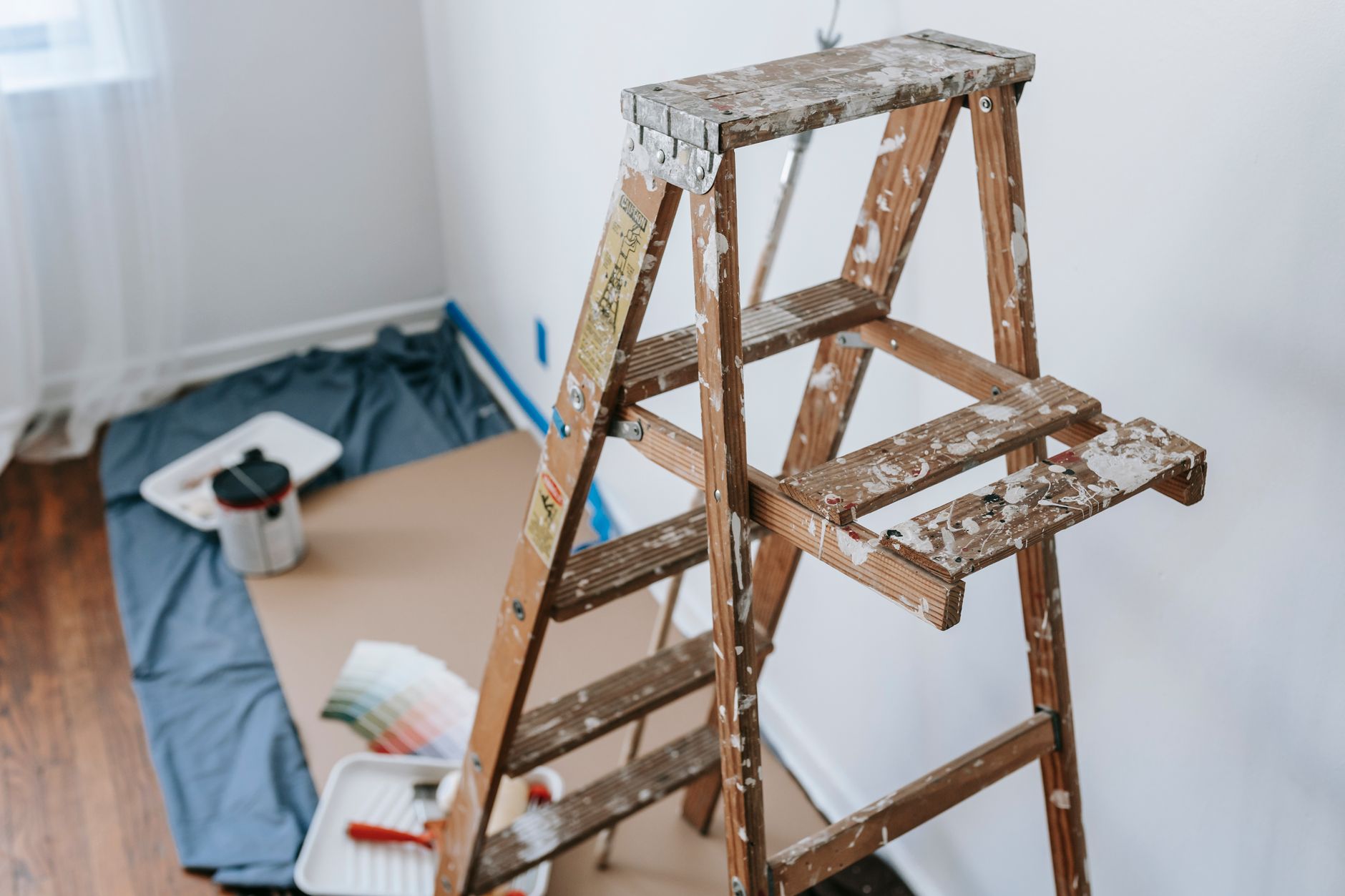
A messy stepladder and painting tools set up for a home interior renovation project in Santa Monica, CA

Coating a wall is a chemical process with conditions attached, and the conditions are printed on the side of the can in small type that almost nobody reads. Paint applied outside that band does not fail immediately or dramatically. It fails quietly, two or three years early, in ways that look like a product problem or a preparation problem, and the actual cause was a Tuesday morning that was six degrees too cold.

This is the part of the job a homeowner has the most influence over and the least information about. A crew under schedule pressure will paint in conditions they know are marginal, because the alternative is losing the day. Knowing what the limits actually are, and why they exist, changes that conversation.

What has to happen for a coating to work

A waterborne coating dries in two stages that people conflate constantly.

The first is evaporation. Water leaves the film and the surface stops being wet. This is what dry to the touch means, and it can happen in under an hour.

The second is coalescence. The resin particles left behind have to flow together and fuse into a continuous, flexible film. This is the stage that actually creates the coating, it takes far longer, and it is temperature dependent in a way that evaporation is not.

Every product has a minimum film formation temperature, below which coalescence does not complete. Paint applied below it dries, looks fine, and never becomes a proper film. It stays porous and weak, it chalks early, it fails adhesion, and it often takes a year for anybody to notice.

That is the reason temperature minimums exist, and it is why they cannot be negotiated by adding a second coat or waiting longer.

The three temperatures, and only one of them is on your phone

Air temperature is what the forecast tells you. It is the least useful of the three.

Surface temperature is what the coating actually touches, and it is wildly different from air temperature. A south facing dark wall in direct sun can sit far above ambient, easily above the point where a coating flashes off before it can level, leaving lap marks and poor adhesion. The same wall in shade at seven in the morning can be well below ambient because it radiated heat to the sky all night. An infrared thermometer costs very little and any crew doing serious exterior painting should have one in the truck.

The third temperature is the overnight low, and it is the one that catches people out. Most products specify a minimum that must hold not just during application but for some hours afterward, often overnight. A day that reaches a comfortable afternoon high and drops sharply after sunset can put a freshly coated wall below the minimum during the exact window when coalescence is still happening.

The practical implication is that a fine looking afternoon in a cool month is often not a paintable afternoon, because the coating will be caught by the evening.

Dew point is the number nobody checks

Dew point is the temperature at which air becomes saturated and moisture condenses onto surfaces. When a surface falls to or below the dew point, it grows a film of water, whether or not anybody sees it.

Coating a surface with condensation on it is coating a surface with a release agent. Coating a surface that will reach dew point a few hours later, while the film is still open, is worse, because the moisture forms inside a partially cured coating. The visible result is called surfactant leaching, meaning brown or tan streaks running down a freshly painted wall, and it is one of the most common callbacks in the trade. It usually appears on the shaded elevations the morning after.

The rule of thumb professionals use is to keep the surface at least a few degrees above the dew point during application and during the cure window. On a coastal or marine influenced morning the surface can sit at dew point until mid morning, which is a large part of why crews who know what they are doing do not start coating at first light even when the light is good and the day looks perfect.

Humidity slows everything, and that is not always bad

High relative humidity slows evaporation. The film stays open longer, the recoat window extends, and cure takes longer.

That has one genuine advantage, which is that it reduces lap marks by giving the coating time to level. In hot dry conditions the opposite problem dominates: material skins over so fast that a roller coming back to a previously coated area cannot blend into it, and the join shows permanently.

The disadvantages are larger. Extended open time means extended vulnerability to dust, insects and a sudden rain. It means the second coat is delayed, sometimes past the end of the working day. And combined with falling evening temperatures, high humidity is exactly the recipe for the condensation problem above.

Most manufacturers put an upper humidity limit in the data sheet, commonly around eighty five percent, and most crews ignore it.

Wind, sun and rain

Wind above a moderate speed causes two problems. It accelerates surface drying, worsening lap marks and reducing adhesion. And with spray application it carries material, which is how a neighbour’s car acquires a fine coat of your body colour. Most crews will not spray above a modest wind speed and should not.

Direct sun on the surface being coated is a straightforward no. Work should follow the shade around the house, which is why a competent crew moves elevation to elevation through the day rather than working in the order that seems logical from the driveway. Being told that the west wall will be done in the morning is a sign someone is thinking about this.

Rain is obvious but the timing is not. Most quality acrylics become rain resistant within a couple of hours in good conditions, but that is rain resistant, not cured. A sharp shower onto a film that is four hours old on a cool humid day can still produce washout streaks. The relevant question is not whether it is raining now but what the next twelve hours look like.

The general numbers, with the caveat that the label wins

Modern acrylic products commonly specify a minimum around fifty degrees Fahrenheit, and a number of low temperature formulations go down to thirty five. Older or cheaper products may require sixty. Oil based coatings generally want it warmer still and behave badly in cold.

Upper limits are less consistent but surface temperature above roughly ninety five to one hundred degrees is where problems start regardless of product.

What matters far more than remembering any of those figures is the habit of looking. The technical data sheet, not the marketing label, states the minimum air temperature, the minimum surface temperature, the dew point margin, the humidity range, and the recoat window at several temperatures. All of that is published free by every manufacturer, and a crew that cannot tell you those numbers for the product they are about to apply to your house has not read them either.

What this means for scheduling the job

The practical version, for a homeowner planning work:

The best window in most of coastal and inland Southern California is late spring through early autumn, and the constraint in that window is heat and sun rather than cold.

Within a day, the workable hours are usually mid morning through late afternoon. Early morning is often blocked by dew point, late afternoon by the approaching overnight low and by the recoat window running out.

A marine layer morning is not a paintable morning, and a crew that waits it out is protecting the job rather than wasting your money.

Winter work is entirely possible with low temperature formulations, but the usable window inside each day is much narrower, the job takes more calendar days, and the overnight low becomes the governing constraint rather than the daytime high.

And if a crew proposes to push through a marginal day to finish, the right question is whether the manufacturer’s stated conditions will be met for the full cure window, not just at the moment of application. That question, asked pleasantly, tends to produce an honest answer, and an honest answer is worth a lost day.

The failures, and how to recognise which one you have

Blistering with a clean cavity behind it usually means moisture in or under the film, from coating a damp substrate or from condensation during cure.

Brown or tan streaks running down a wall, worst on shaded elevations, appearing within days, is surfactant leaching from moisture during cure. It is often washable if caught early.

Early chalking and poor adhesion across a whole elevation, showing up in year two or three, is the signature of coating below the minimum film formation temperature.

Visible lap marks and uneven sheen in raking light point to hot, dry or windy application, or to spraying without back rolling.

Each of those is a condition failure rather than a product failure, and each of them is avoidable by looking at three numbers before the first wall gets coated.

Published

How to Get a Condo Repaint Approved by Your Santa Monica Board

How to Get a Condo Repaint Approved by Your Santa Monica Board

Nobody buys a condominium expecting to present a paint color to a committee. Then the trim goes chalky, or the stucco starts showing its cracks, and you find out that the wall outside your window is not yours to repaint. What follows is the process as it actually runs in Santa Monica buildings, written for an owner who wants the work done this year rather than next.

Who Owns the Wall

Start here, because everything else follows from it. In most condominium developments the exterior surfaces are common area, owned by the association and maintained by it. Your ownership typically begins at the inside face of the perimeter wall. Some documents grant an owner exclusive use of a balcony or a patio, which is a different thing again: you get the use of it, the association still owns the surface, and painting it usually still needs approval.

That means two separate questions. Is this surface even mine to touch, and if it is, does changing its appearance require written approval? In a great many Santa Monica buildings the answer to the second is yes regardless of the first, because architectural guidelines adopted under the governing documents cover anything visible from the common area or from the street.

Read the Documents Before You Read a Fan Deck

The declaration, usually called the CC and Rs, is the controlling document. Under it most associations have adopted architectural guidelines, and those are where the practical requirements live: what needs approval, what form to use, how many days the committee has to respond, and whether there is an approved palette you can pick from without a full review.

Find the sentence that applies to you and read it twice. If it is ambiguous, write to the board or the management company and ask, and keep the reply. A verbal yes from one director in the elevator is not an approval and will not protect you if the composition of the board changes.

If your building does have an adopted palette and you like one of the colors on it, stop reading. You do not need a submittal, you need a scope and a start date, and you have just saved yourself six weeks.

The Meeting Calendar Is the Real Schedule

Here is the part that surprises owners. The constraint on a condominium repaint is almost never the painter’s availability and almost never the drying time. It is that the architectural committee meets once a month, and everything you do or fail to do gets measured in meeting cycles.

A complete packet submitted with time to spare gets voted on at the next meeting. Call it four to six weeks from submission to a recorded decision. A packet that comes back for more information costs you a full cycle, and by the time you supply what was missing you may have missed the cut off for the following one as well. Two deferrals and a spring repaint has become an autumn repaint.

So the first thing to find out is not what colors are trending. It is what date the committee sits, and what its submission deadline is ahead of that date. Everything else gets planned backwards from there.

What a Complete Submittal Contains

The goal of the package is to make approval the easy option. A reviewer who has to imagine something, or who has an unanswered question, will vote to defer, because deferring is safe and approving on incomplete information is not.

Marked elevations. A drawing or a clear photograph of each face of the building, annotated to show which product and which finish goes on which surface. Stucco field, trim, fascia, doors, railings, stair stringers, soffits. This is the single item most often missing, and it is the item that stops the committee wondering whether the railings are meant to match the trim.

Product data sheets. The manufacturer’s sheet for every product named. It takes two minutes to download and it answers durability questions before anyone asks them.

Photographs of the drawdowns. More on these below. Shot on the building, in more than one light condition.

A written scope with the exclusions stated. What is being painted, in what order, and explicitly what is not. Boards care about the edges of a job. A scope that says the north elevation stucco and trim but not the balcony decking or the window frames gets read once and voted on. A scope that only lists what is included leaves the reviewer to guess about everything else.

The contractor’s insurance certificate, naming the association where the documents require it, and a proposed schedule with start and finish dates.

Many management companies also have a form of their own. Ask for it at the start. Filling out their form is faster than rewriting yours to match it.

Why Committees Defer

Outright refusal is rare. Deferral is the common outcome and it is almost always for one of four reasons.

The color cannot be judged from what was submitted. A printed chip stapled to a form, viewed indoors, is not enough information to approve a whole elevation and reasonable people know it.

The scope is unclear, so the committee cannot tell how far the work extends.

The proposal is out of step with the rest of the building or the block, and nobody wants to be the committee that approved the one house that does not fit.

Or the paperwork is simply incomplete: no insurance certificate, no data sheets, no schedule.

All four are avoidable in an afternoon of preparation.

Drawdowns Are the Part People Skip

A drawdown is a large sample of the actual paint, brushed onto the actual building. Not a chip, not a poster board leaned against the wall, though a board is better than nothing if the surface cannot be sampled. Sample on at least two elevations, because a color does not behave the same way facing the ocean as it does facing a neighbor’s hedge.

Then leave it up for about a week and look at it three times a day. In Santa Monica that matters more than it does inland, because the marine layer changes the light so completely. Under morning fog everything cools and flattens. At noon the glare washes out the mid tones. Late afternoon sun coming in low off the water warms every color noticeably, and a soft greige that looked expensive at lunchtime can go pink at five.

Photograph the samples in each of those conditions and put the photographs in the packet. A committee that has seen the color do that on its own wall has nothing left to imagine.

Sheen, and the Question Nobody Asks

Owners arrive with a color and no opinion on finish. Boards notice finish, because it is what determines whether the building looks tired in two years.

Flat hides surface irregularity, which is what you want on older troweled stucco with patch history, and it is the hardest surface to clean. Eggshell and satin buy you washability and start revealing every wave and repair in raking light. Semi gloss and gloss belong on trim, doors and metal railings, where they shed water and take a scrub.

Specifying satin across a wavy stucco field is a common mistake and an expensive one, because the only fix is another coat of something else.

Painting First and Asking Afterwards

It is worth being blunt about this. If you paint an approval requiring surface without approval, the association can require you to restore it at your own expense, and boards in this city do enforce that. The money is bad and the position it puts you in with your neighbors is worse.

If you painted to an approved submittal and the vote is recorded in the minutes, you are on firm ground even if the board turns over. Ask for the approval in writing, and check that it made the minutes.

Coastal Realities the Board Should Know

Two things about working near the water belong in your schedule and, ideally, in your submittal, because they explain a timeline that would otherwise look slow.

Surface temperature and dew point run the working day. A coat applied to a wall still damp from fog, or applied late enough that dew forms before the film sets, will blush, streak or fail to bond. A competent crew works the sunlit elevations first and stops earlier in the afternoon than a crew five miles inland would. That is not padding, it is the reason the coating lasts.

The other is that salt air and ultraviolet exposure are not evenly distributed across a building. South and west elevations fade first and fail first. A board reviewing a phased repaint should generally take those elevations first, not last, and phasing by elevation is a legitimate way to fit a full exterior into a reserve that will not cover it all in one year.

A Realistic Sequence

Six weeks before the meeting, read the documents and confirm what needs approval and on what form. Five weeks out, walk the building with your painter and settle the surface by surface specification. Four weeks out, get drawdowns on the wall. Three weeks out, photograph them across the day, assemble the packet and submit it ahead of the deadline. Then the meeting happens, the vote gets recorded, and work starts on a date you actually chose.

Skip the drawdowns and the same job takes twelve weeks instead of six, and you will have spent the difference waiting rather than painting.

Questions about your own building? Call Cardsofchange at (424) 561-9870. If all you need is a straight answer on whether your exterior needs a submittal at all, ask for that.

Buildings We Paint

Condominiums, small apartment buildings and single family homes across Santa Monica and the neighboring Westside. Much of our schedule sits in the 1920s to 1970s stock north of Pico and through Ocean Park, where associations and architectural committees are the norm rather than the exception.

Not sure whether your building needs approval? Call (424) 561-9870 and read us the sentence from your governing documents. It usually takes two minutes to settle.

  • Santa Monica, CA (90401, 90402, 90403, 90404, 90405)
  • Ocean Park
  • Sunset Park
  • Pacific Palisades, CA
  • Brentwood, CA
  • Venice, CA
  • Mar Vista, CA
  • West Los Angeles, CA

Cardsofchange paints houses, apartment buildings and condominiums in Santa Monica, and a large share of that work has to be signed off by somebody before a brush moves. An owner association, an architectural committee, sometimes a management company acting on the board's behalf. We have learned to work backwards from the approval rather than forwards from the estimate.

The pattern repeats. An owner gets three bids, picks one, and only then discovers the governing documents require written approval for any change to an exterior surface. The submittal goes in with a paint chip stapled to it. The committee cannot tell from a chip what the building will look like, so they defer. The next meeting is in a month. The scaffolding date moves, the crew books another job, and a repaint that could have started in April starts in August.

What actually gets approved is a package that answers the questions before they are asked. Elevations, the exact product and finish for each surface, sheen, a large sample painted on the building itself, and a scope written so a reviewer can see where the work stops. That takes an afternoon to assemble and it is the difference between one meeting and three.

  1. A chip is not a sampleA two inch swatch under fluorescent light in a clubhouse tells a committee nothing. A large drawdown painted on the actual wall, looked at in morning fog and again at four in the afternoon, tells them everything.
  2. Committees defer, they rarely refuseAn outright no is uncommon. What kills the schedule is a deferral for more information, and every deferral costs you a full meeting cycle. Anticipating the question is cheaper than answering it later.
  3. The scope is half the submittalBoards want to know what you are not touching. Stucco field but not trim, balcony railings but not the soffits. A scope with clear edges gets read once and voted on.

Work That Passes a Board Review

Painting for buildings where somebody other than the owner has to approve the result.

01Exterior Repaints, Whole Building
Stucco, trim, doors, railings and stair stringers on multi unit buildings, sequenced elevation by elevation so residents keep a way in and out and the street staging stays inside the permit.
02Color Submittal Packages
The document the committee actually votes on. Elevation drawings marked with product and finish per surface, manufacturer data sheets, drawdown photographs, and a scope written in plain language with the exclusions stated.
03Drawdowns and Wall Samples
Large samples brushed onto the building where the light will hit them, not onto card. We leave them up for a week so the board sees the color in fog, in glare and in shade before they commit the association's money.
04Single Unit Interior Work
Kitchens, hallways, ceilings and trim inside a unit. Interiors normally sit outside the association's reach, though the common corridor outside your door usually does not. We check before we quote.
05Stucco Crack Preparation
Hairline map cracking routed, filled and sealed before coating. Elastomeric where the wall can dry to the inside and a conventional acrylic where it cannot, because the wrong choice traps water behind a film that will not let it out.
06Turnover and Rent Ready Repaints
A unit changing hands on a short schedule. Two coats, cut lines that survive close inspection, and dry times honestly stated so the new tenant is not moving furniture onto soft paint.

Budget Numbers a Board Can Vote On

Boards need a number early, often before anyone has walked the site, and a number pulled out of the air makes the next conversation harder. The ranges below are what comparable Santa Monica work has run. A firm written figure follows the walkthrough, and on a building we will break it out by elevation so the board can phase it if the reserve will not stretch.

Submittal Package Only$350 to $900Single Unit Interior$1,400 to $4,800Building Exterior, Per Elevation$4,200 to $19,000
  • Drawdowns on the building
  • Scope, product sheets, elevations
Start the packet
  • Two coats over any color change
  • Trim and doors included
Get a number
  • Prep, crack repair, two coats
  • Phased by elevation if needed
Book a walkthrough

Questions Boards Ask Before They Sign

Does my association really have to approve a paint color?
Read your CC and Rs and any architectural guidelines adopted under them. In most Santa Monica condominium documents any change to an exterior surface, including color, requires written approval, and in many buildings the exterior is common area the association owns outright. If the language is ambiguous, ask the board in writing and keep the reply. Verbal permission from one director is not an approval.
How long does approval usually take?
One meeting cycle if the packet is complete, which in most buildings here means four to six weeks from submission to a recorded vote. Two or three cycles if it comes back for more information. The single biggest predictor is whether the committee can see what the finished wall will look like without having to imagine it.
What goes in a submittal package?
Marked elevations showing which product and finish goes on which surface, manufacturer data sheets for each product, photographs of the drawdowns on the building, a written scope with exclusions, your contractor's insurance certificate naming the association, and the proposed schedule. Some management companies have their own form as well. Ask for it before you write anything.
Can the board make me repaint if they change their mind later?
If you painted to an approved submittal and kept the approval in writing, you are on solid ground. If you painted first and asked afterwards, you can be required to restore it at your own cost, and that happens often enough in this city to be worth avoiding. Get the vote recorded in the minutes.
The fog never lifts some mornings. Does that stop work?
It stops exterior coating, yes. Surface temperature and dew point decide the working day near the ocean, and a coat applied onto a damp wall or laid down late enough that dew forms on it before it sets will blush, streak or fail to bond. We work the sunlit elevations first and stop earlier in the afternoon than crews five miles inland do.

Get the Packet in Before the Next Meeting

Find out when your architectural committee meets, then work backwards. If the meeting is four weeks out there is time to walk the building, brush up drawdowns, leave them a week for the board to look at in different light, and still have the package in hand with days to spare. Call and we will tell you honestly whether you can make that meeting or whether you are aiming at the one after it.

Call (424) 561-9870